
Take Your Time

Take Your Time

Dear Writers,

Last week, I hired a friend to build me a customized bookcase for my writing space. The bookcase takes up two walls. My books and notebooks have now been liberated from their precarious piles on the floor—culled and neatly arranged on shelves.

While sorting through these piles, I had to go through each notebook to decide what I wanted to keep. As I did this, I noticed how many Post-it notes had been pasted into my notebooks. Post-it notes, as it turned out, were the unintimidating little squares that offered me a blank space to write—a blank space that said, You can make a note to return to later—later when you have more time.

What I took away from this observation was this: I had everything I needed to write. The only thing missing was time.

Over the years of not having enough time—of working a full-time job that bled into the waking hours of every day of the week—I became an expert at finding stories about writers who did make the time. Some wrote when their families were asleep. Some wrote on the train to and from work. Some wrote during their lunch hours. Some checked into motels for the weekend. Some used apps to stop themselves from going online. One wore a special hat so her husband would not disturb her. Another treated writing like high-intensity interval training from the gym. Some hid their phones. Some created special desks in their homes or carved out a corner in a coffee shop.

I believe I tried all these ideas—except for wearing the hat and installing the app. And I did write. But not consistently. And certainly not by making it a priority.

My Notes Taught Me Seven Post-it-Note-Sized Lessons

  1. Post-it note lesson #1: Prioritize writing—or it won’t happen.
  2. Post-it note lesson #2: Schedule writing time (days and hours) and stick to it.
  3. Post-it note lesson #3: Take yourself and your writing seriously.
  4. Post-it note lesson #4: Work toward a deadline that means something to you.
  5. Post-it note lesson #5: Establish a weekly word count and do your best to reach it.
  6. Post-it note lesson #6: Create accountability (join a writing community or find a writing partner).
  7. Post-it note lesson #7: Ask yourself: Why and/or for whom are you writing? (Write the answer on another Post-it note and paste it where you’ll see it daily.)

Last summer, I taught a class called Writing and Accountability. My syllabus began with the following quote:

Whatever you’re meant to do, do it now.
The conditions are always impossible.

— Doris Lessing, Nobel Prize in Literature, 2007

After reading my notebooks and the Post-it notes inside them, I realized—again, not for the first time—that the most important gift a writer can give themselves is time. And the second most important gift is accountability.

A writing retreat is the place where these two gifts are folded into one. And if you’re lucky, that gift can happen in a space where nature’s beauty offers you the chance to wake refreshed, to be still, to daydream.

A writing retreat is a time to listen to the voice that has been trying to reach you for weeks, probably months—possibly longer.

Sometimes this voice says, Take your time.
Sometimes it says, Take your time.
Today, it’s saying, It’s time.

This Two Trees Solstice Retreat will be the space that not only hears your internal voice but also offers you its echo—it’s time, it’s time, it’s time.

Happy New Year! 

Elena
Welcome!

Welcome!


 ~ Consider this an invitation ~

~ ~ Consider this a written libation ~ ~

2020 called to us. This is what we heard:

  • Writers are looking for a refuge
  • Writers are looking to connect with their creative selves
  • Writers are looking for ways to commune with each other
  • Writers are looking for more than critiques; they are also looking for mentors
  • Writers are looking for guides who will step out of the usual apprentice/expert relationship into new ways of inspiring and supporting one another
  • Writers want to make a difference in the world


Writers are looking for

IMAGINATION & SOUL PARTNERS


Taking this idea of Imagination and Soul Partners, a group of us got together to brainstorm how to offer writers a place to connect and be inspired. A new path revealed itself—The Two Trees Writers Collaborative.


What is the Two Trees Writers Collective?

We are established writers and teachers, united by our intuitive approaches and inspired by unconventional ways of nurturing writers and creatives in their own development and growth. We are a community that has every individual’s needs and processes at its root. Collectively, we have decades of experience working with master’s degree candidates, which means we can go anywhere with you: deep into the craft and language of your manuscript or deep into your process and your writer’s soul.


Our Response to 2020 and beyond:

We invite you to put away uncertainty. We encourage you to say goodbye to feelings of disconnection. Instead, we welcome you to join us—to Re-Start, Re-Group, Re-Fresh—on a Re-Treat: the Two Trees Writers Collaborative inaugural event: The Grove: A Virtual Weekend for Creativity, Community and Restorative Practice.


We can’t wait to see what happens next!


Dear Writers

Dear Writers

Dear Writers,

I’m guessing that, for the majority of you, your first desire to write was a way to express an emotion that you were having difficulty feeling or understanding. Or it might have been an early attempt to document, to explore the world in which you lived. But then you grow up and reality kicks in big time, and reality can be an obstacle to working with your imagination.  It can mess with your mind. If you’re not careful it can catch you with your guard down and say things like: Oh please, you think your little poem is going to change the plight of people living as refugees? You think your little novel is going to make people think about a compassionate society that cares for its citizens?

In response to this voice, we can choose to focus on the value of the conversation that our writing will prompt with our audience. Because, as writers, we are not only recorders of history and memory, we are also striving to be forward-thinkers and visionaries.  Our job is to promote thought, to witness, to explore, to dream, and above all, to create connection.

In her poem, “Children of our Age,” the 1996 Nobel Laureate in literature, Wislawa Szymborska, wrote:

“Whether you like it or not,

Your genes have a political past

Your skin a political cast,

Your eyes, a political slant.”

She is speaking here of what separates us from one another, and at times like these, there is so much to separate us that it becomes an incredibly huge task to look for what unites us. But as writers, it is our responsibility to keep reminding our country of this connection. 

So when someone asks you, What do you do? perhaps you can come up with a sentence or two that says something like:  “I am part of an international conversation. I use my imagination to explore possibilities, to investigate the past, and to dream about the future.” And when someone asks you, What can you do with a degree in creative writing? perhaps you can say something like, “Well, my degree is just the key that opens a door. But once I step over the threshold, I can be a poet or a playwright or a novelist or a memoirist or a blogger or a protestor or an activist.” It really doesn’t matter what label you claim; you will be – you are – a writer in the world and it is the action you take that holds all the promise. 

I know that many of us are having a difficult time right now.  Remember that we are a community: a community of writers, whose role in our society is to attempt to witness, document, invent, and imagine a different kind of future.  Imagination is our strength. Faith is our call to action.

With gratitude for community,

Elena Georgiou

(This letter was first published on The Writer in the World, a blog for the MFA in Creative Writing community at Goddard College, which is directed by Elena Georgiou, and shared here with her permission.)

The Three (21st Century) Rs

The Three (21st Century) Rs

Every year, I take a week off. Ostensibly, it’s a vacation in Cape Cod, but it always turns into a mini writing retreat. I unplug; and once I’ve done so, what happens?

I Read. I wRite. I Relax.

Why is it that relaxation in the 21st century feels like a luxury? In my childhood, adults didn’t have to decide to relax. They just did it; exhaustion forced relaxation on them. My family didn’t need to go to Fine Dining Establishments (FDE) to prove they were doing The Third R. In fact, we only did the FDEs on special occasions like birthdays or anniversaries. The rest of the time we made Sunday into A Day of Rest. Which meant friends and family—who all lived within a zero-point-something- to a ten-mile radius of one another—dropped by for English tea or Cypriot chai or Turkish coffee. Or they showed up, en masse, for a large, prearranged, Sunday lunch.

And when I say “they” rested, I supposed I mean The Men rested. The story is different for The Women; their Sunday was modified—more like A Day of Partial Rest. They were the ones who made the tea, the chai, and the coffee, and the large midday meal; they were the ones who washed and dried the dishes and the glasses. (This was before working-class families had the dishwashers). And they were the ones who put everything back in their places so that the kitchen was pristine.

baklavaThe Women were also the ones who made the baklava, the apple pies, the honey cake, and the trifles; and they were the ones who took these desserts into The Men who were watching Arsenal play some other team on TV. They were also the ones who stayed in the kitchen; who did not sprawl on the livingroom couch, but sat in a circle of chairs around the kitchen table, talking about whatever made them/us laugh.

And there we sat for hours—Relaxing.

Where are these women now? They have Retired. Another R that seems to come into our lives later and later in the 21st century. 20th century Britain allowed working-class people to retire at retirement age. (But now?) I will finish paying my mortgage at age 77, which means I will be working until then. My hope is that I will have at least seven years of Retirement before I die. My wish is that I will be able to pay the mortgage early and get a decade and a half of retirement before I die.

Where are The Men of my childhood? Sadly, most of them are dead. Does the Third R—Relaxation—hasten your demise, if you’re a man? Is this an argument against it? God, I hope not. I’m trying to argue for more time for The Three Rs—for both women and men, equally—not less.

Even while I’m unplugged, practicing The Rs, I yearn for more I remember a time—before the advent of the virtual world—when reading was not something that felt like One of Life’s Little Luxuries, but an integral part of my day-to-day living. Whenever I’m on vacation/mini writing retreat, my body holds the same two questions: How did my life get to the place where reading feels like a luxury? What can I do to get back to my pre-virtual life?

Today, I’m also thinking: I wish I lived closer to people who had the time to drop by—just for an hour or possibly two on a Sunday afternoon—for Turkish coffee or English tea or Cypriot chai. Dear Reader, if you decide to take next Sunday off and you find yourself in my neighborhood around 2pm, you’re welcome to drop by. I’ll be the one in the kitchen slicing the warm baklava into diamonds.

(This post was first published on the Pele’s Fire blog before the Covid pandemic.)

Rock The Casbah (Redux)

Rock The Casbah (Redux)

First: Take a large breath.

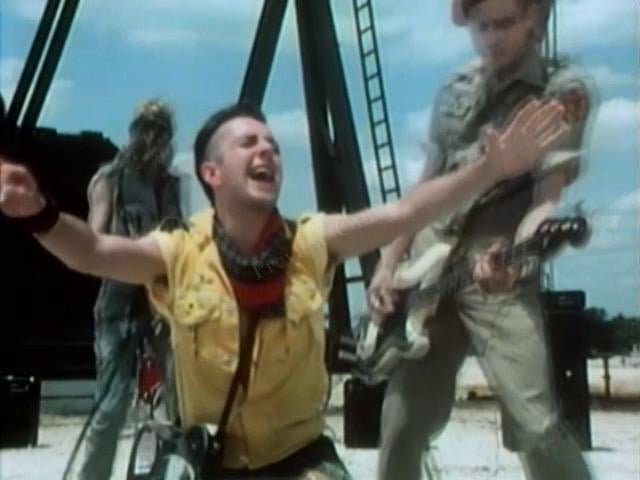
Do you know that moment when you are in your Bootcamp exercise class, trying not to look totally decrepit as you struggle to find the right form when the trainer commands that you do endless burpees and then the music changes to The Clash’s “Rock The Casbah,” but it isn’t The (actual) Clash but some session musicians that have been paid to convert Punk into Disco so that gyms across America can use the song as a workout track, and suddenly you plunge into a profound sadness when you realize that the music of your youth—the music that spoke about revolution, that represented a stand against capitalism and fundamentalism—is now simply the music to which you put your ungainly booty in the air, and then squat-thrust back into place without drawing too much attention to yourself, and then you think about all the time you’ve wasted in your life and how you wasted it, and what happened to writing because you believed that simply by publishing you could have an effect on a public conversation, but then you heard Richard Price, a writer for the hugely popular TV show The Wire say in an interview on NPR’s Fresh Air that the people who had once helped him with his research for the show now avoided him because they had not yet read his book, and that Toni_Morrison_2008-2Toni Morrison also avoided him because she was asked to blurb his book and she, too, had not read it, and you realize that maybe the biggest revolution is not necessarily to write a book, but to get others to read the thing you have spent three years writing—three years, which is enough time to give birth to three children, or nine children if you had three sets of triplets—and thinking about this you ask yourself where in your life can you find the time to promote your work when your dayjob and cooking and cleaning take up all of your day (and yes, it is totally true that you don’t have to make your bed every day, but you do it anyway, and besides, really, how much time would not making your bed save?), and then you wonder how much time you might save if you did not cook and clean, but who would do it, and where would you find the money to pay someone else to do it (see: Nickel and Dimed), and then you realize that these thoughts are just another way to waste more precious hours, and so you try to push them out of your mind as you move from the gym to the café to write (see: Bait and Switch: The (Futile) Pursuit of the American Dream) and you think about the John Lennon quote about life being what happens as you are busy making other plans, and you pay for your coffee, and you want to sit to write, but you know that sitting is now bad for your body, so you force yourself to stand while you type, and you try to focus on your work and not your aching back and neck, and you know that if you were really focused on your work it is unlikely that you would notice your back and neck aching, but then you tell yourself that it is good that you are noticing these things, so that you can prevent yourself from developing the same Repetitive Stress injury that you have developed twice before . . .  and now you notice that the café has its own backing track, and guess what? The Clash is back—The (real) Clash, not the session musicians; punk, not disco—and (in a low voice, which is considerate to the other café goers, but carries none of the energy of a protest song) you sing:

The oil down the desert way
Has been shakin’ to the top
The sheik he drove his Cadillac
He went a’ cruisin’ down the ville

and you realize that you never really knew all the words, so you Google them, and before you know it you are on Wiki, trying to annotate lyrics written to protest the ban on Western music in Iran after the 1979 Islamic Revolution, and you feel okay about this “research” because you are doing it without putting your booty in a chair; and even though you are losing your fight against middle-age spread, at least you still have a punk heart, which is what spurs the writing, which is what keeps you asking the questions with answers that can only be figured out by putting pen to paper.

And so you keep finding the time to write—to Rock your own Casbah.  And the truth is that no matter how much time you spend listening to session musicians, it does not dilute how vital it is to write words of protest, regardless of whether they are accompanied by a punk or disco backing track—think of the revolution that came via the Village People’s “YMCA”; think of the revolutions that have happened over the length of your life and how heavily each of them leaned on the power of what was spoken, written, chanted, and sung.  And?  Because? (And here is where I am gesturing directly to you Dear Virtual Reader.) No matter how far we all travel from our idealistic youth, surely we can always stand up to write our own protests; and even if we are young enough to write with our booty in the chair, surely our work as Writers in the World is to do like The Clash and to write words that Rock?

(The post originally appeared on the Goddard MFAW blog.)